
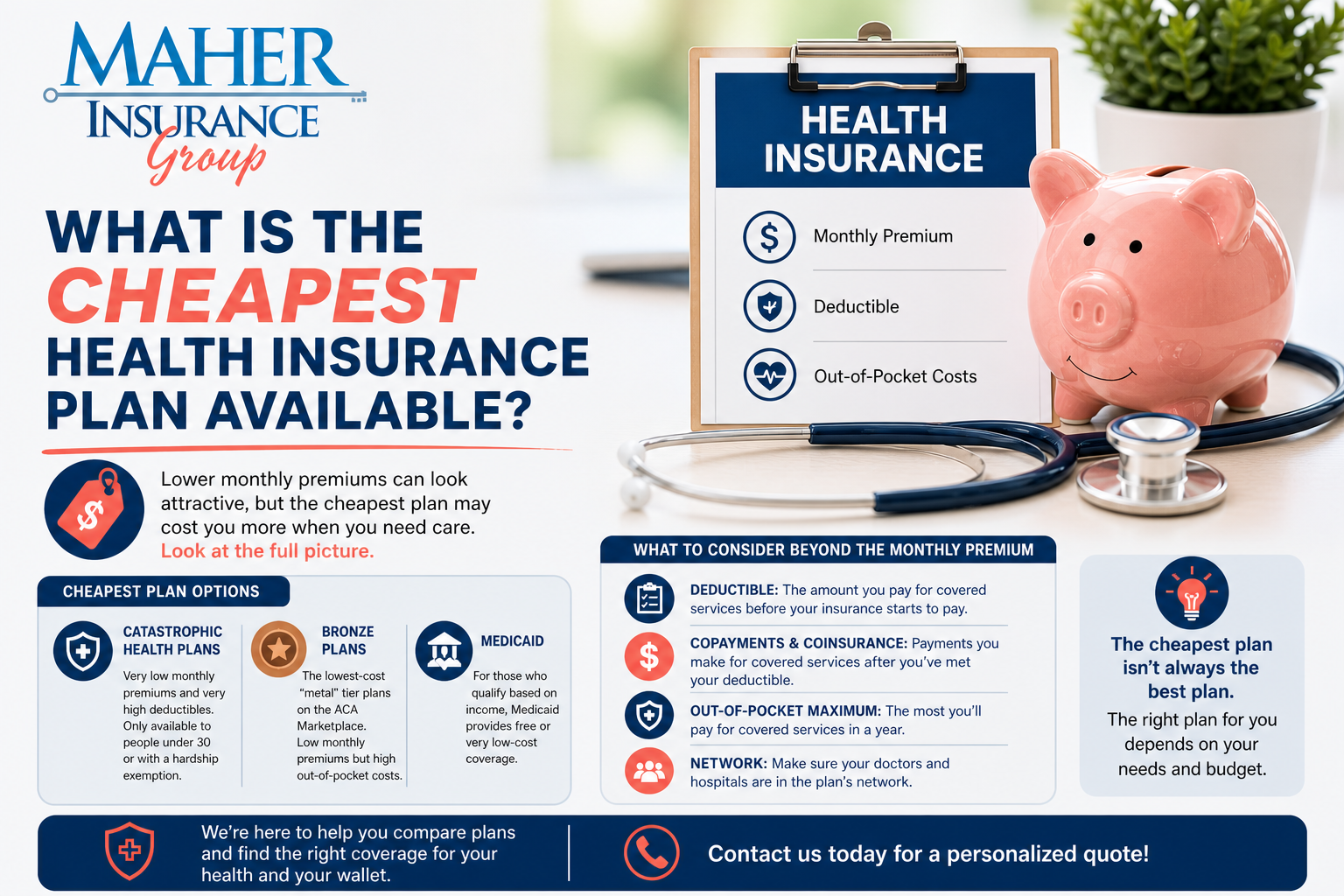
Everyone wants to find a great deal, and health insurance is no exception. But when it comes to finding the “cheapest” plan, it’s important to look beyond just the monthly premium. A plan that looks affordable upfront can end up costing you more later if you need care.
The cheapest health insurance plans are usually those with the lowest monthly premiums, but they often come with higher deductibles and out-of-pocket costs. These are commonly known as high-deductible health plans (HDHPs). For people who are generally healthy and don’t expect to use medical services, these plans can make sense. However, if you have ongoing health needs or unexpected medical issues arise, the costs can add up quickly.
Common Low-Cost Health Insurance Options
If you’re looking for more affordable coverage, here are a few options that are typically considered the “cheapest”:
- Catastrophic Health Plans
These plans offer very low monthly premiums but come with very high deductibles. They are designed to protect you in worst-case scenarios, like serious illness or injury. Catastrophic plans are usually only available to individuals under age 30 or those who qualify for a hardship exemption.
- Bronze Plans
Bronze plans are the lowest-cost tier available through the ACA Marketplace. They have lower monthly premiums but higher out-of-pocket costs when you receive care. These plans can be a good option if you want basic coverage and are comfortable paying more when you actually use services.
- Medicaid
For individuals and families who qualify based on income, Medicaid provides free or very low-cost health coverage. It’s one of the most affordable options available and offers comprehensive benefits.
What to Consider Beyond the Monthly Premium
While it’s tempting to focus only on what you’ll pay each month, it’s just as important to understand the other costs that come with a plan:
Deductible
This is the amount you must pay out of pocket before your insurance starts covering services.
Copayments and Coinsurance
These are your share of the costs after you meet your deductible, such as payments for doctor visits, prescriptions, or procedures.
Out-of-Pocket Maximum
This is the most you’ll have to pay in a year for covered services. Once you reach this limit, your insurance covers 100% of eligible costs.
Network
Make sure your preferred doctors, specialists, and hospitals are included in the plan’s network. Going out of network can significantly increase your costs.
The Bottom Line
The cheapest health insurance plan isn’t always the best plan. The right choice depends on your health needs, how often you expect to use care, and what you can realistically afford if something unexpected happens.
Taking the time to compare both monthly premiums and potential out-of-pocket costs can help you find a plan that truly fits your budget and gives you peace of mind.
OTHER POSTS